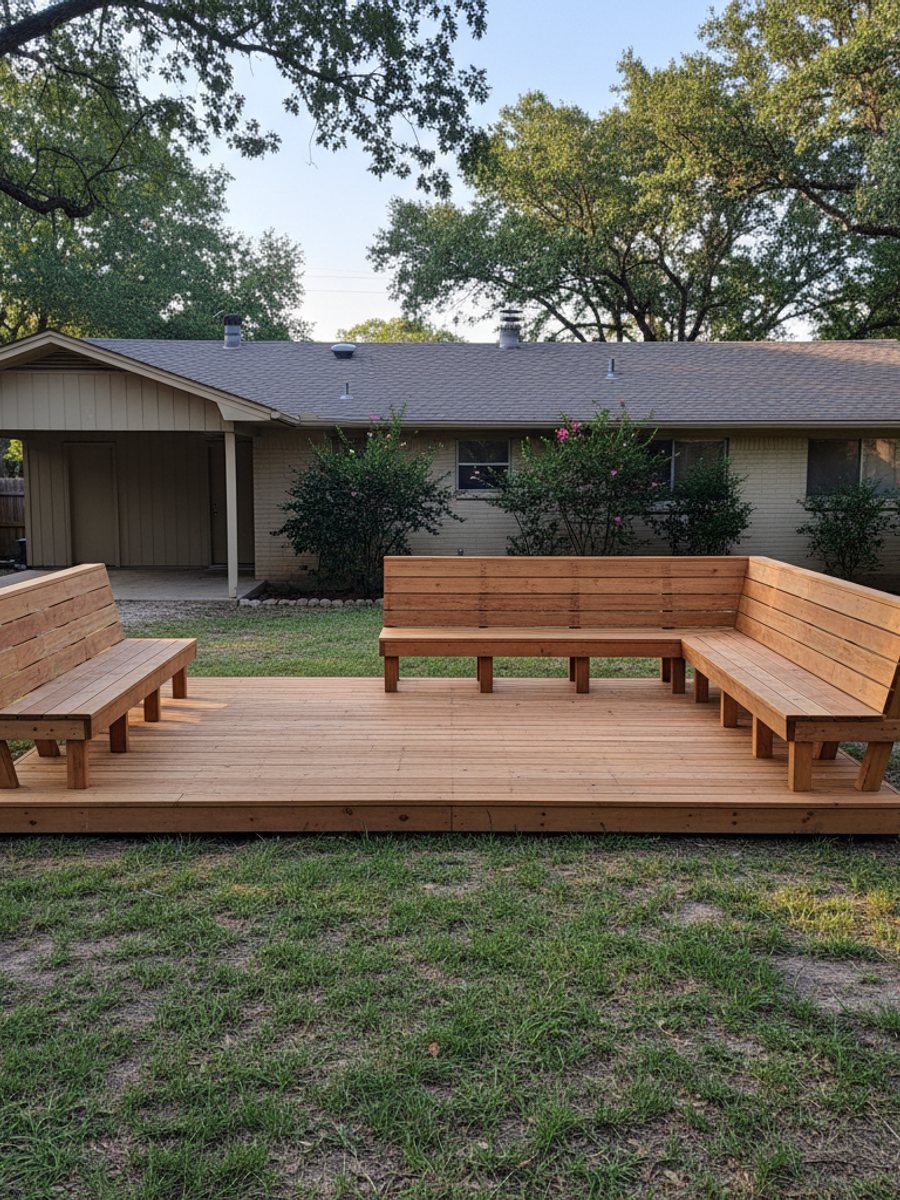
People ask us when the best month is to start a deck, usually expecting one answer like "spring" or "fall." The real answer depends on which part of the job you mean. Pouring a footing, framing lumber, and staining a finished deck all behave differently depending on heat, humidity, and what the ground under the deck is doing. In Allen, all three of those things swing hard over the year, more than most homeowners realize until they've lived through a July build or an April storm delay.
The clay underneath changes the schedule before anything else does
Most of Allen sits on blackland prairie clay. It's expansive soil, meaning it swells when it's wet and shrinks when it dries out, sometimes by an inch or more of vertical movement in a bad season. That matters for deck footings because a footing poured too shallow will heave or settle unevenly as the clay around it moves. We typically go 12 to 18 inches deep depending on the deck's load and footprint, sometimes with a bell-shaped base to resist uplift. Pouring during a stretch of stable moisture, not right after a week of heavy rain and not during an August drought, gives the concrete a more predictable bearing surface to sit on. Concrete itself needs about 28 days to reach full cure strength, though you can usually walk on it and start framing after 3 to 5 days if temperatures cooperate.
Clay that's cracked and bone dry in late summer can swallow water fast once the rain comes back, which is exactly the kind of swing that throws a freshly poured footing off level. Building when the ground is in a more neutral state, not freshly soaked and not cracked open, is part of why timing matters as much as the mix design.
Summer heat does more damage than people expect
July and August in Allen regularly hit the upper 90s and triple digits, and the humidity isn't low enough to call it dry heat. That combination is rough on a few parts of deck work specifically. Pressure-treated lumber that gets installed hot and then shrinks as it dries can open gaps at the fastener holes, sometimes enough to cause squeaking or slight warping within the first year. Stains and sealers applied in direct summer sun can flash dry on the surface before they've soaked in, which leaves a film instead of real penetration, and that film peels. Most exterior stain products list an application range around 50 to 90 degrees Fahrenheit for a reason, and an Allen deck board in full sun in August can be well past 120 degrees on the surface even if the air temp reads 95.
None of this means summer work is off the table. It means staining gets scheduled for early morning, and composite decking, which handles heat better than wood but still expands along its length, gets installed with the gaps the manufacturer specifies rather than tight joints that'll buckle come July.
Spring brings the storms, not just the nice weather
March through May is severe weather season here, with hail being the real concern for anything with a roof structure attached, like a pergola or a covered deck. A hailstorm that dents a car can also crack composite boards or dimple a wood cap rail if material is sitting exposed on site waiting for installation. We watch the forecast closely during these months and try not to have lumber or decking staged outside for days at a time. Rain itself isn't the enemy, framing lumber gets rained on constantly during normal builds, but a soaked yard also means a softer, more unpredictable base for footing work, so a string of wet weeks in April can push a timeline back a bit more than people expect.
Fall is usually the sweet spot, and here's specifically why
September through November tends to give Allen its most workable stretch: temperatures in the 60s and 70s, lower humidity than summer, and fewer severe storm days than spring. Concrete cures at a more even rate without flash-setting in the heat. Lumber installed in cooler weather has already contracted somewhat, so it's less likely to shrink dramatically after the fact and open up fastener gaps. Stain and sealant go on and actually soak into the wood grain instead of skinning over. If you're planning a new build, a resurfacing job, or a full repaint and reseal, fall gives the materials the best conditions to do what they're supposed to do.
Winter here is mild by most standards, but it's not nothing. Ice storms do happen, usually January or February, and a hard freeze right after a stain job hasn't cured can cause it to crack or fail early. Winter is a fine time for framing and structural work on milder days, just not the best time for finish work.
Permits and HOA review add their own timeline
The City of Allen requires a permit for most new deck construction and significant structural repair, and inspectors typically check footing depth and framing connections before decking goes down, plus a final inspection once railings and stairs are in. If your property backs up to a greenbelt or sits near a setback line, that gets checked against your plat before the permit's issued. A lot of Allen's newer subdivisions, especially ones built in the last 15 to 20 years, have an HOA with its own design review process for decks, pergolas, and anything visible from the street or a neighboring yard, and that approval can take a couple of weeks on its own. Building the permit and HOA timeline into your season of choice matters just as much as picking a month with good weather, because a great weather window doesn't help if the paperwork isn't through yet.
What this actually means for your project
If you're starting from scratch, aim to break ground in September or October so footings cure in mild weather and framing goes up before winter. If you're resurfacing or restaining an existing deck, early fall or late spring, after the worst hail risk has passed but before summer heat sets in, gives the finish its best shot at lasting the full 2 to 3 years most stains are rated for. Repairs and demolition aren't nearly as weather-sensitive and can happen almost any time of year. We work around all of this on every job we take on, and if you want a read on what your specific yard, lumber choice, or timeline calls for, that's the kind of thing Oasis Deck Company can walk through with you before you commit to a start date.